Signature Experiences

Six ways the Circle travels.

A flagship domestic circuit of three private-access heritage pilgrimages, expeditions held with the communities that host them, one annual convening, and mobility counsel. Every one of them is capped, permitted, and accounted for.

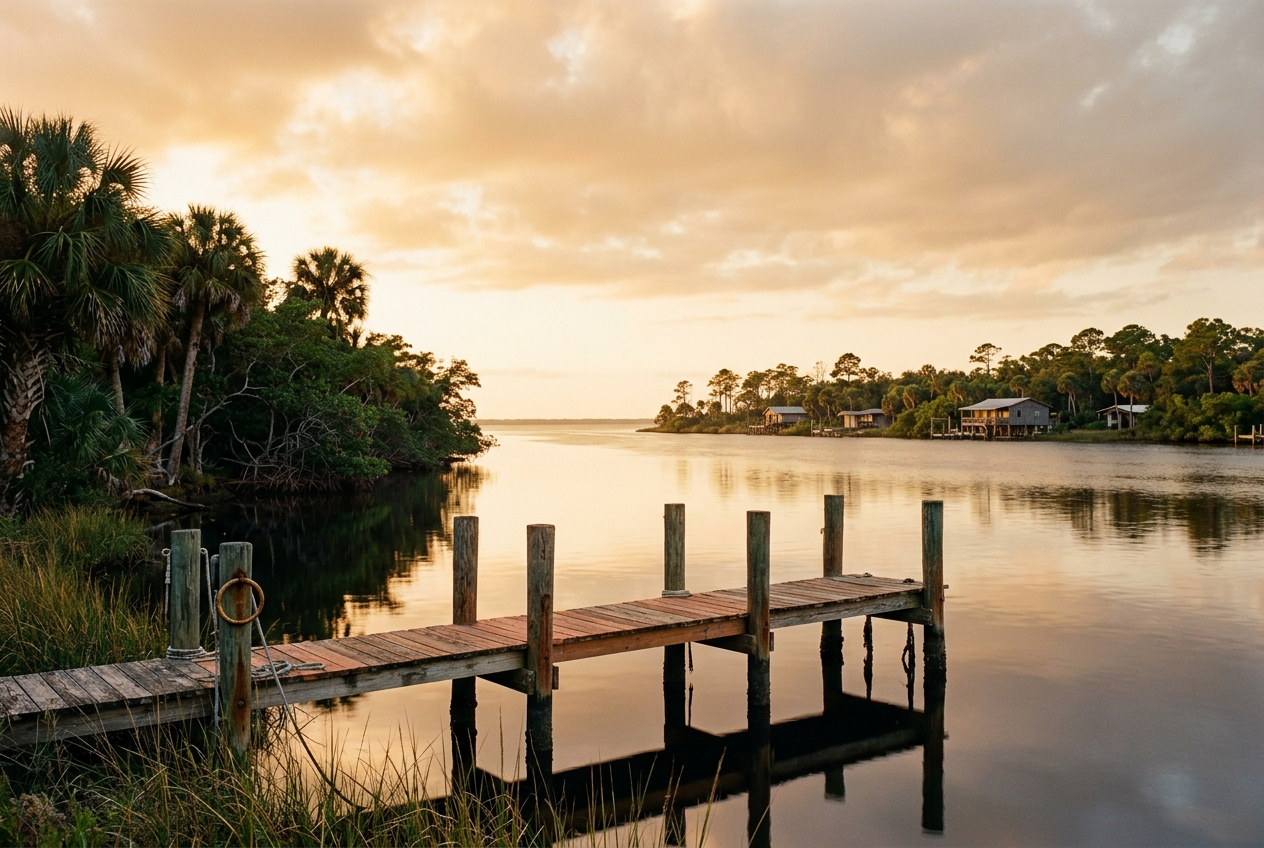
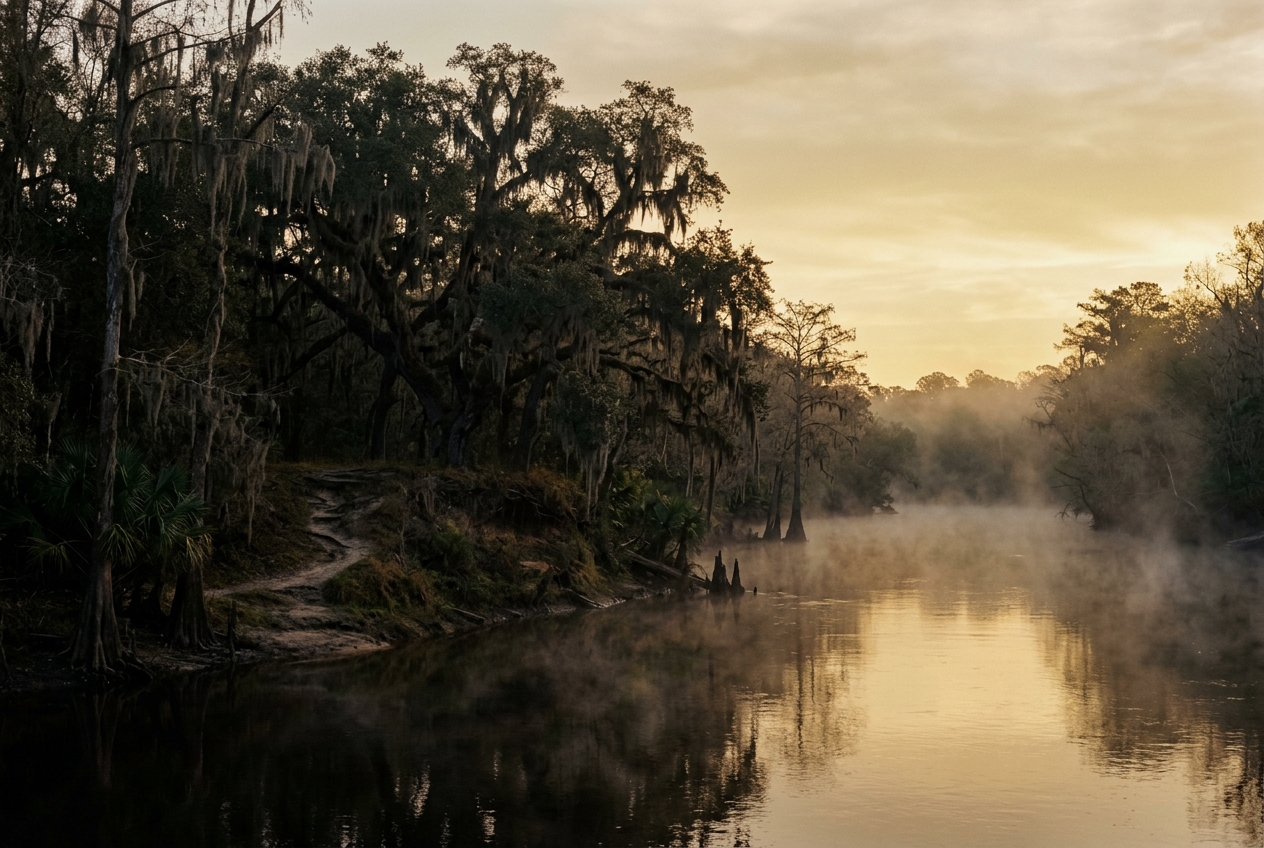
Dawn on the Apalachicola River

Flagship domestic series

The Sovereign Florida Circuit

Not a tour of Florida. A return to the places where sovereignty was declared.

Series
Three private-access experiences along the Florida peninsula
Observances
Memorial weekend · February · the Back to Angola festival weekend
Held with
Regional historians, lead archaeologists, tribal representatives, descendant families
Available from
Horizon Fellow

Our flagship domestic series — three private-access heritage pilgrimages along the Florida peninsula, where free Black settlement, maroon resistance, and Indigenous alliance were not a footnote but a functioning political order.

Florida has been sold to you as a coastline. It was, for the better part of two centuries, something far more consequential: the first ground on this continent where African-descended people held land legally, defended it militarily, and governed it in alliance with Indigenous nations. Spanish Florida offered sanctuary before the United States existed. Free Black militias held its northern frontier. Maroon settlements on the Gulf coast maintained trade routes to the Bahamas and the Caribbean that no treaty ever managed to sever.

None of that is on the brochure, and most of it is not on the historical marker either. So we do not run tours. We arrange returns — gates closed, cameras down, with the historians, archaeologists, tribal representatives, and descendant families who hold the record and decide what may be said aloud.

The Circuit is deliberately austere in its structure and generous in its access. Small numbers. A reading dossier issued before you travel, and the expectation you will have read it. Site time outside public hours, because the difference between a monument and a memorial is who else is standing there. And a published accounting, every time, of what your fee paid for and to whom.

It is designed for principals who understand that heritage is not sentiment. It is title, jurisdiction, precedent, and inheritance — the same instruments you already use, exercised three hundred years earlier by people who were told they had no standing to use them at all.

The Circuit, in three parts

Prospect Bluff — Memorial Weekend
The Sovereign Florida Circuit

Prospect Bluff — Memorial Weekend

Where several hundred people chose to hold ground rather than be returned.

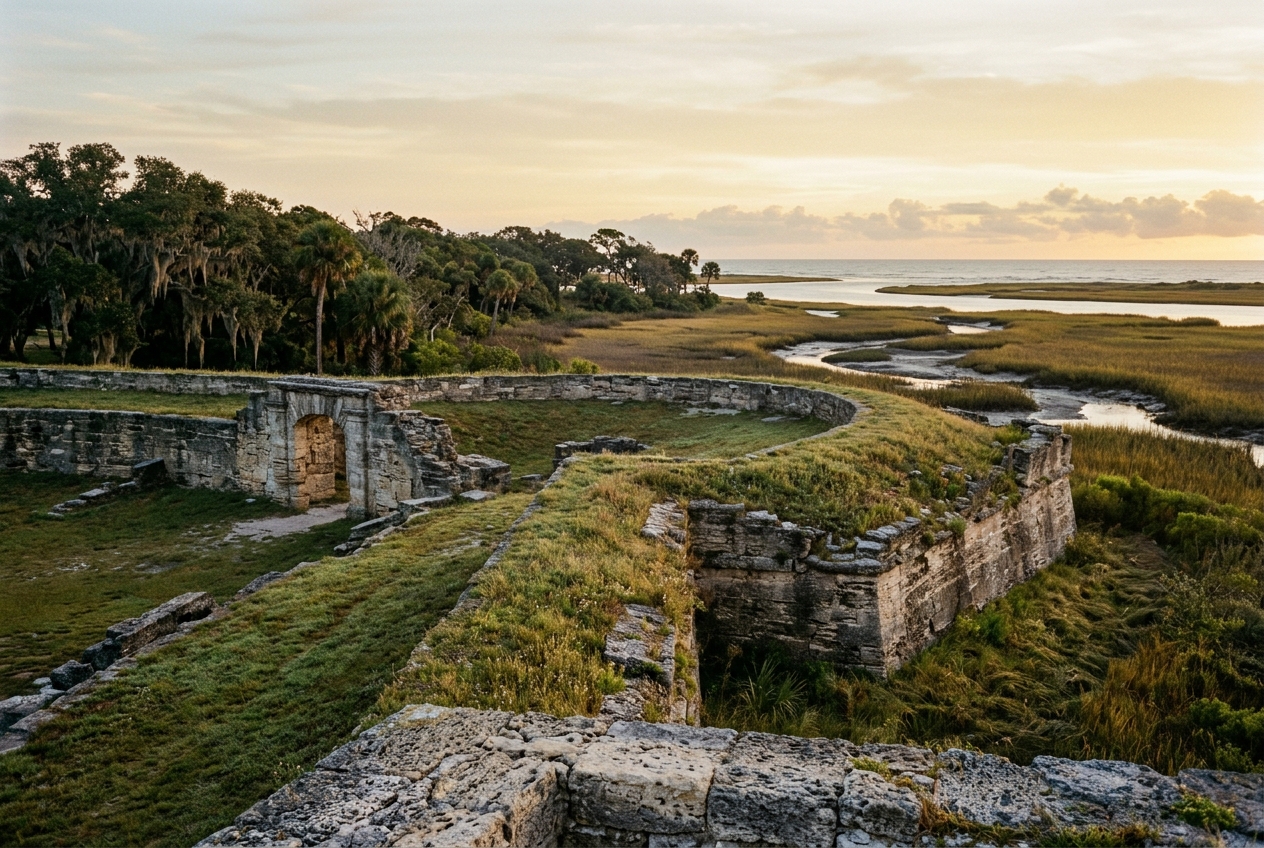
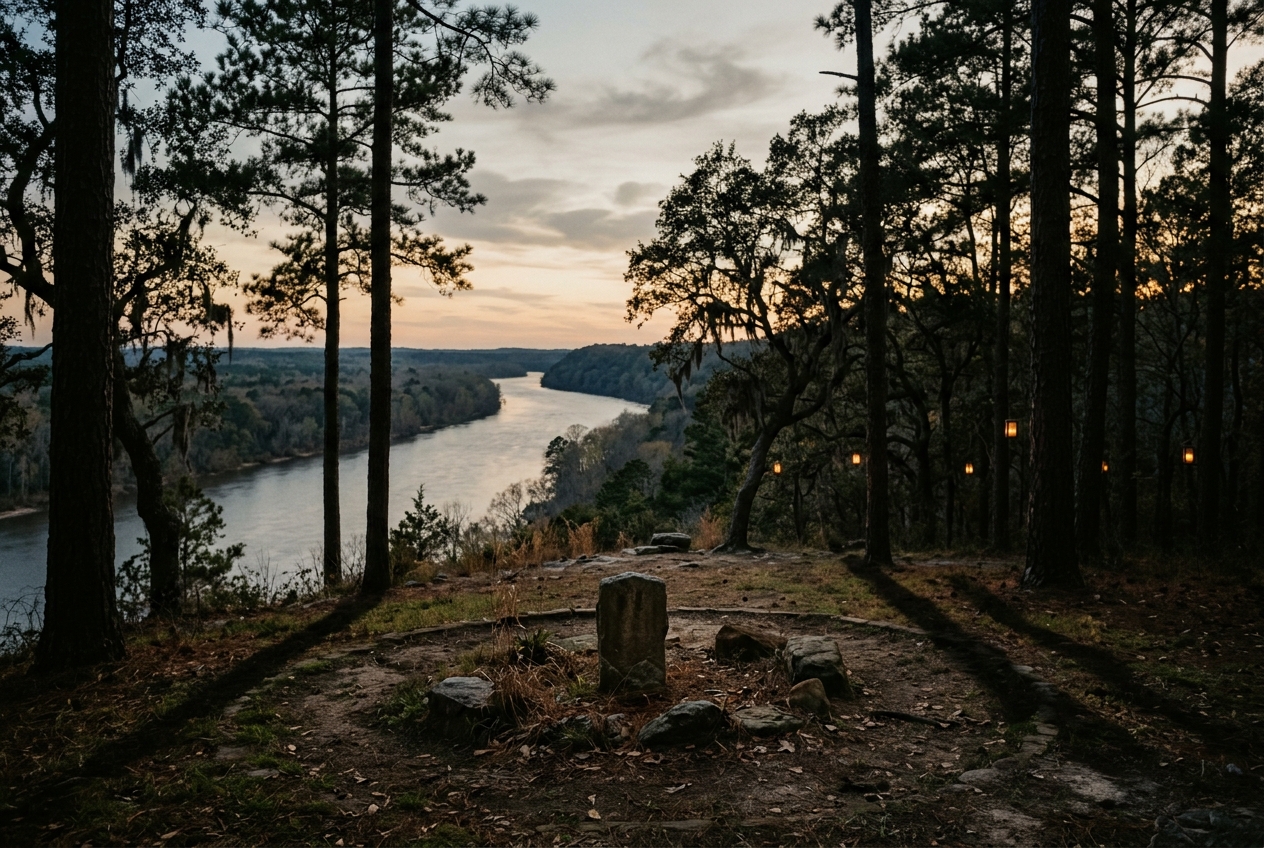
On a bluff above the Apalachicola River, in the years after 1814, several hundred people built something the United States could not tolerate the existence of: a fortified settlement of free Black families, freedom seekers who had walked out of Georgia and the Carolinas, and allied Creek and Seminole people, holding cannon, holding fields, and holding the river. History filed it as the Negro Fort at Prospect Bluff. Its residents would have described it more simply. It was theirs.

In July of 1816 a shot from a United States gunboat found the magazine, and the greater part of that community was killed in a single moment. There is no cemetery. The bluff is the cemetery. This is why we come once a year, on Memorial weekend, and why we come quietly.

Your access is closed-gate: the earthworks and the bluff before public hours, walked with regional historians and, where they choose to join us, representatives of the tribal nations whose ancestors stood on that ground alongside the settlement's founders. The briefing is held behind closed doors and is candid about the parts of the record that remain contested.

The observance itself is land-based, unrecorded, and unhurried — an hour held on the bluff with no programme and no photography. Members consistently describe it as the most consequential hour the Circle has ever arranged for them. We schedule nothing for the remainder of that day, by design.

Where
Prospect Bluff, Apalachicola River, Franklin County, Florida
When
Memorial Day weekend only — one observance a year
Cohort
Twelve guests maximum
Available from
Horizon Fellow
The Back to Angola Delegation
The Sovereign Florida Circuit

The Back to Angola Delegation

A C-suite delegation to a settlement the maps were instructed to forget.

On the Manatee River, within sight of Tampa Bay, a community of several hundred maroons — self-liberated Africans and their Seminole allies — built a settlement they called Angola. It farmed, it traded, it received newcomers, and it functioned for the better part of a decade outside the reach of any slaveholding jurisdiction. In 1821 it was destroyed by raid. Many of its people did not scatter inland; they went to sea, to Andros and the Bahamas, where their descendants live today and can still tell you which family came from where.

That is not a lost history. It is a continuing one, and the Back to Angola Festival is where it is kept. We attend as a delegation, not as an audience.

Principals receive delegation standing, with introductions made on your behalf rather than left to chance, and a private roundtable with the festival's founders and the historians and archaeologists leading work on the settlement site. The conversation is genuinely bilateral: these are people building institutional capacity, and they are candid about what patronage is useful and what is merely decorative.

Around the festival we curate what the crowd cannot access — the settlement ground along the Manatee outside festival hours, and a closed dinner with Bahamian-descendant delegates when they travel. You will leave with a specific understanding of a transatlantic return route, and usually with one relationship you did not expect to make.

Where
Manatee River and Bradenton, Tampa Bay, Florida
When
The Back to Angola Festival weekend, annually
Cohort
Ten principals maximum
Available from
Horizon Fellow
Fort Mose — The February Symposium
The Sovereign Florida Circuit

Fort Mose — The February Symposium

1738. The first legally free African settlement on this continent, and the charter that made it so.

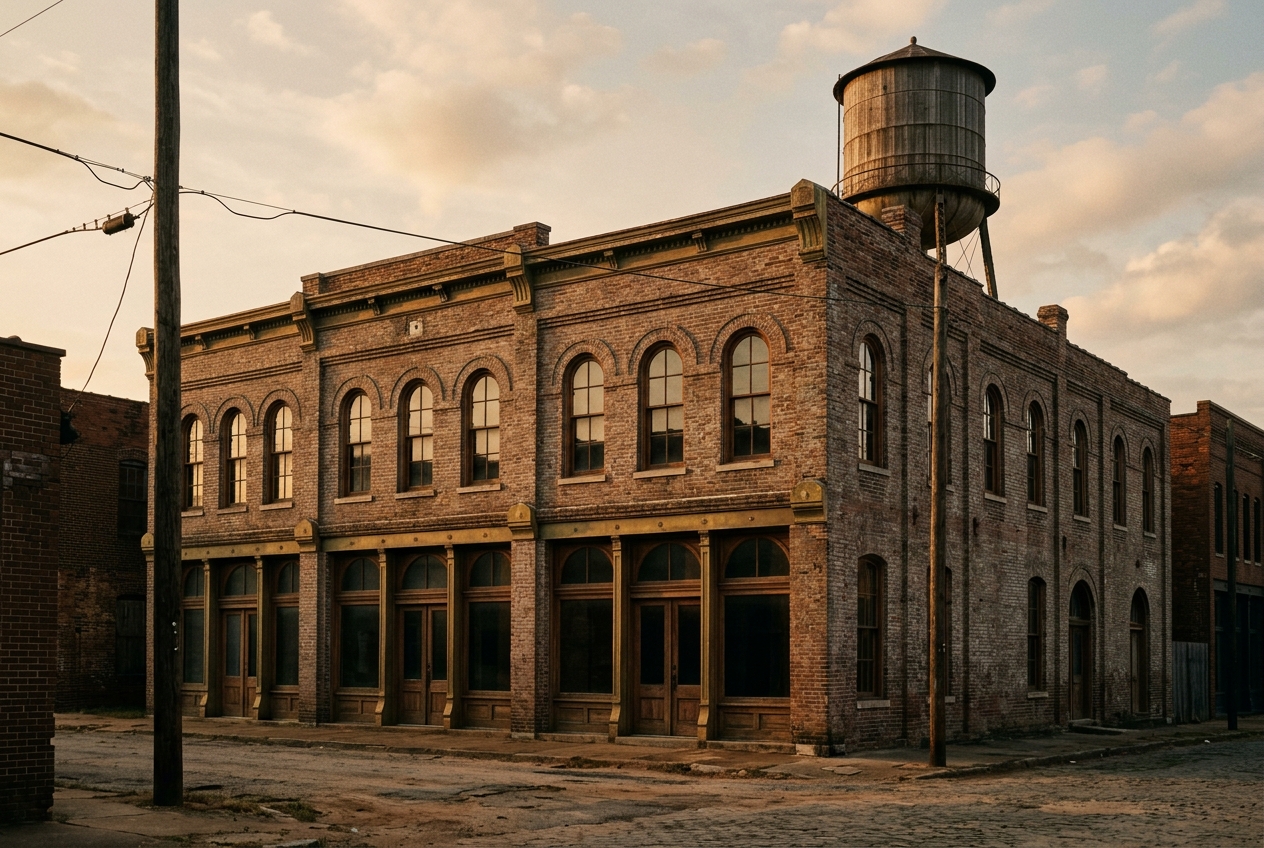
Gracia Real de Santa Teresa de Mose was chartered in 1738, two miles north of St. Augustine, as a free town of formerly enslaved Africans who had reached Spanish Florida and claimed sanctuary under an edict issued in 1693. Its residents held land. They held a militia commission. They held the northern approach to the city, and when Georgia came south in 1740, they held it in combat. That is legal sovereignty, exercised on this continent, thirty-eight years before the Declaration.

We come in February, in the cool season, when the ground and the archaeology allow it — and never with a crowd.

Access is closed-gate: the grounds at dusk or at first light with the lead archaeologists, walking the 1738 footprint as the survey has recovered it, standing where the militia stood and where the marsh made the position defensible. Where conservation permits, there is a handling session with recovered material.

The symposium that follows is the reason principals return. It is a working session, not a lecture: the 1693 sanctuary edict as an instrument, the militia charter as a defence structure, the town's legal standing and how it was ultimately unwound — read alongside counsel against the structures you are building now. Members have described it as the only history seminar that ever changed a trust document.

Where
Fort Mose, St. Augustine, Florida
When
February only, in the cool season
Cohort
Ten guests maximum
Available from
Horizon Fellow

The standing programme

Sovereign Heritage Expeditions

Sovereign Heritage Expeditions

Small cohorts. Community-governed. Permitted, not purchased.

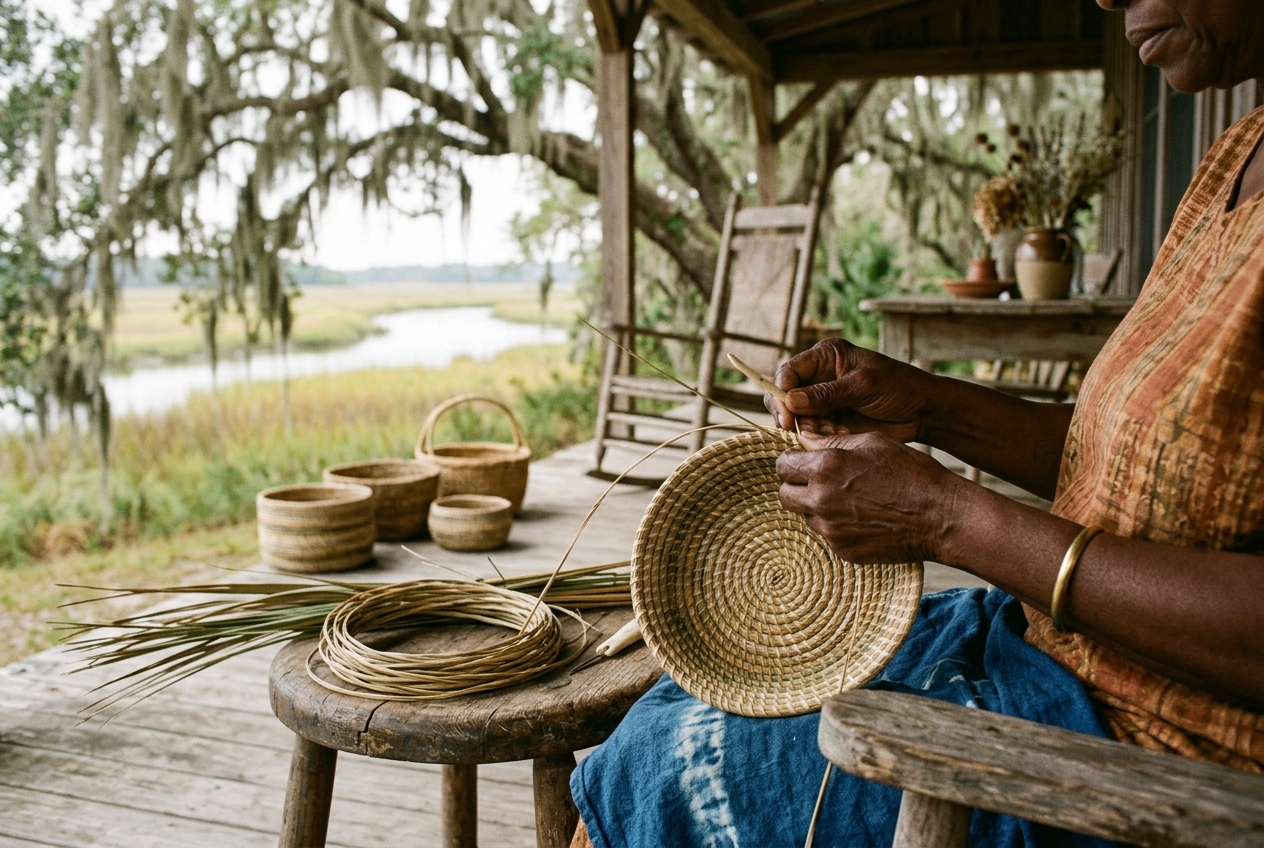
Curated expeditions of no more than eight, travelling into places where sovereignty is lived rather than commemorated: the Gullah Geechee Sea Islands, where land retention is still contested acre by acre and the language survives in the mouths of people who never surrendered it. Indigenous sovereign lands entered under permit and clan consent.

You will be briefed on protocol before departure and expected to observe it. You will work alongside your hosts — in a kitchen, on a shoreline, in a field — because hosts consistently report that this is what separates a visit they would repeat from one they would not. You will not arrive with a camera lens where a hand is wanted.

Each expedition carries a published Community Impact accounting: what was paid, to which community-controlled fund, and what it now underwrites — language instruction, title and land-retention litigation, archive repatriation, ranger and stewardship programmes.

Held with
Community councils, heritage corporations, traditional owners
Cohort
Eight guests maximum
Available from
Horizon Fellow — any two immersive experiences a year
The Vanguard Summit

The Vanguard Summit

One convening a year. Forty households. Nothing broadcast.

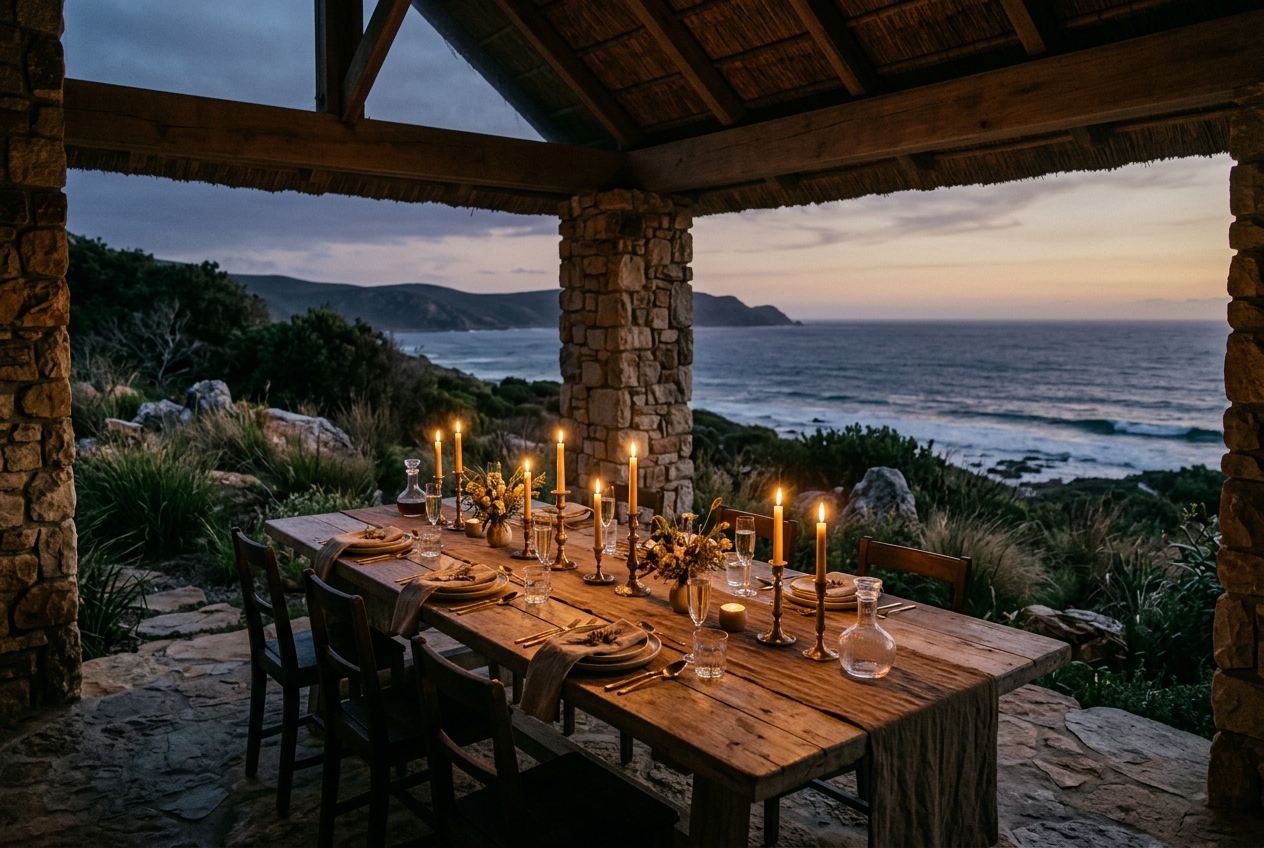
An annual eco-luxury retreat where the Circle's principals gather in one place — part wealth and trust mastermind, part cultural immersion, part genuine restoration.

Mornings sit with counsel: multi-generational trust architecture, heritage and land-holding structures, cross-border residency, and the unglamorous mechanics of moving capital and family across jurisdictions without losing either. Afternoons belong to the host community — their historians, their makers, their elders, on their terms. Evenings are unrecorded, unstreamed, and unphotographed, which is precisely why people speak candidly.

The setting is chosen for its stewardship as much as its beauty: buildings that sit in their place rather than on it, staff with tenure measured in years, and a footprint the local authority never had to be persuaded about.

You leave with a structure your family can actually use, a shorter list of people you need to explain yourself to, and the specific rest that only comes from being somewhere that asks something of you.

Format
Invitation-only, one convening annually
Table
No more than forty households
Available from
Apex Guild
Global Mobility & Cultural Salons

Global Mobility & Cultural Salons

Access, arranged quietly.

Residency, citizenship, and relocation counsel through Niiji Consulting Inc — assessed against the obligations you already carry, not the brochure you were shown.

Alongside it, a private salon series in London, Accra, New York, Lisbon, Johannesburg, and Charleston: small rooms, one table, no press.

Counsel
Niiji Consulting Inc / Niiji Global
Salons
London · Accra · New York · Lisbon · Johannesburg · Charleston
Available from
Navigator Circle — the salon series and mobility counsel

Membership

The Circle is not sold. It is joined.

Three tiers, reviewed in cohorts. Apex Guild is by invitation and takes applications only — no payment is collected at application.

View Membership

Open to all · no membership required

Start with a city guide

Black towns and historic districts across the United States — Black-owned houses and tables, ancient mounds and shell rings, the museums worth your morning, and the history most guides leave out. Free to read.

All city guides

Next step

See where each experience actually goes.

Nine journeys, each with the itinerary as it would be arranged at your tier.