Oklahoma · Cherokee Nation capital & the Freedmen towns
Tahlequah
The end of the Trail of Tears, and the seat of a nation that rebuilt itself in eighteen months.
Why this city
Tahlequah has been the capital of the Cherokee Nation since 1839, established almost immediately after the forced removal ended here. Within a few years the nation had a written constitution, a bilingual newspaper printed in Sequoyah's syllabary, a supreme court building, and seminaries for both young men and young women — a functioning republic rebuilt from the far end of a death march.
There is a second history here that the Circle does not skip. The Five Tribes — Cherokee, Choctaw, Chickasaw, Muscogee and Seminole — enslaved people of African descent and brought them on removal. Their descendants, the Freedmen, were granted citizenship by the 1866 treaties, later stripped of it, and in 2017 had Cherokee citizenship restored by court ruling. In other nations the question remains contested. Both things are true at once, and the people living inside that contradiction are the most compelling voices in the state.
Two days: the capital square, the Cherokee National History Museum and the Supreme Court on the first; the Freedmen towns and the Muscogee and Osage capitals on the second. Spiro Mounds, two hours south-east, is worth a third.
Museums & historic sites
Cherokee National History Museum
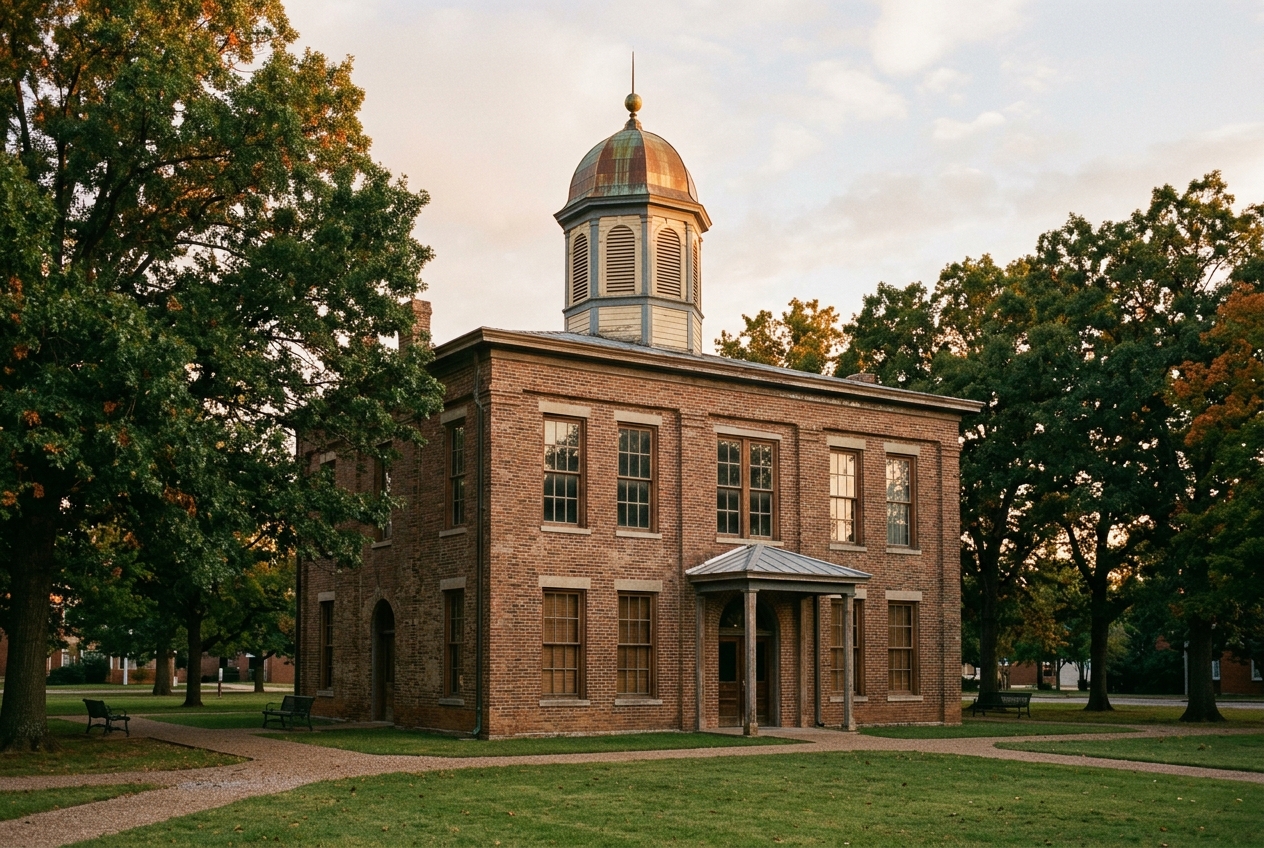
In the 1869 Capitol building on the square. The nation's own account of removal, rebuilding and government.
Cherokee National Supreme Court Museum
Built 1844 — the oldest government building in Oklahoma, and home of the Cherokee Advocate, the first newspaper in the state.
Cherokee National Prison Museum
The nation's own justice system, in the 1875 prison. Small and unusually candid.
Cherokee Heritage Center & Diligwa village
A 1710 Cherokee village and the Trail of Tears exhibit, on the grounds of the old female seminary.
Cherokee Freedmen history
There is no single museum for this. We arrange time with Freedmen descendants and historians, in advance, and it is often the most important conversation of the trip.
Mounds & ancient Indigenous ground
Earthworks, shell rings and mound complexes within reach of the city — most of them older than anything else you will see on this trip. Where a site sits on sovereign or restricted land, enter with a tribal or preserve guide, and never climb a mound.
Spiro Mounds Archaeological Center
Two hours south-east: the only Mississippian site in Oklahoma open to the public, and the source of one of the richest assemblages ever excavated on this continent — much of it looted in the 1930s and still being repatriated.
Muscogee (Creek) Nation Council House, Okmulgee
Ninety minutes south-west: the 1878 Council House museum, and the other end of the removal that emptied Ocmulgee in Georgia.
Osage Nation Museum, Pawhuska
Two hours north-west: the oldest tribally owned museum in the country, in the county where the 1920s murders took place.
Sequoyah's Cabin, Sallisaw
An hour south: the 1829 home of the man who gave the Cherokee language its written syllabary, now a Cherokee Nation site.
Where to stay
Tribally owned lodging in or near Tahlequah
Booked through the Circle's desk. We place members in Native-owned or tribally operated lodging wherever the nation offers it, and say plainly when it does not.
A Black-owned or independent stay toward Muskogee
For the Freedmen-towns day. Forty-five minutes south-west, and closer to the historic all-Black towns.
The table
Cherokee traditional kitchens
Wild onions and eggs in spring, grape dumplings, hominy. Church and community suppers are where this is cooked properly — ask at the Heritage Center.
A Black-owned soul food table in Muskogee
The Freedmen and all-Black-town food tradition, an hour away and worth the drive.
A tribally owned dining room
The Nation operates several. Choose these over the highway options.
Tours & walks
A Cherokee Nation capital tour
Arranged through the Nation's cultural tourism office. Square, court, prison and Capitol in one morning.
A Freedmen towns day
The historic all-Black towns of eastern Oklahoma — Boley, Rentiesville, Taft — with a Freedmen-descendant guide. Arranged well in advance.
A Five Tribes capitals loop
Tahlequah, Okmulgee and Pawhuska over two days, with the removal treaties in hand.
Members have this city's stays, tables and guides booked for them, with introductions where protocol allows. Everyone else is welcome to use the guide exactly as written.
All city guidesNext step
Behind the closed gate.
Our community-governed journeys and the Sovereign Florida Circuit go where a guidebook cannot take you.