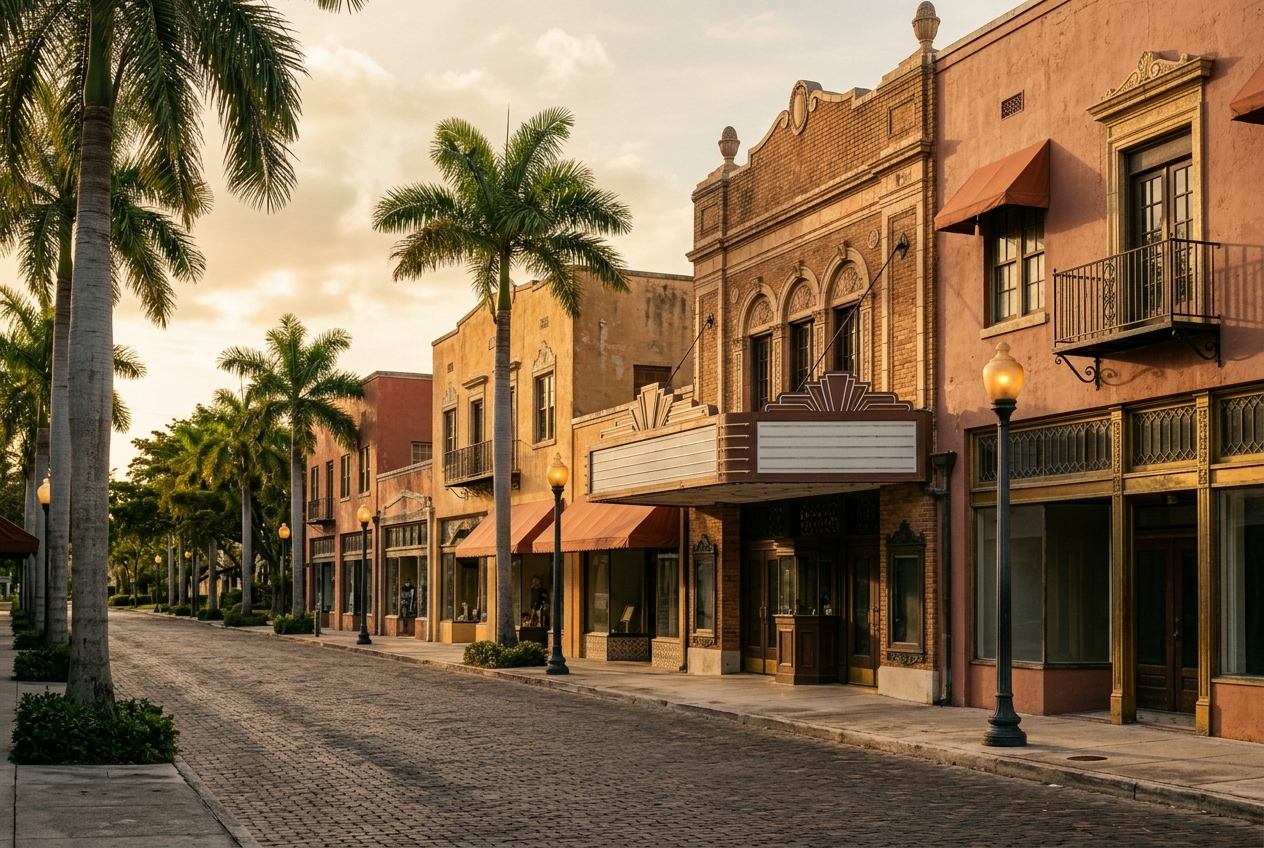
Florida · Historic Overtown & the Folklife Village
Overtown, Miami
Miami was incorporated by 368 men. More than 160 of them were Black. This is where they lived.
Why this city
When Miami incorporated in July of 1896, of the 368 men who signed the charter more than 160 were Black — largely Bahamian labourers and their families, whose skills in coral rock, wood, and tropical agriculture made the city physically possible. They were then confined to a district north-west of the tracks, called Colored Town and later Overtown, which by the 1930s was so alive it was known as the Harlem of the South.
Overtown's decline was not organic. In the 1960s Interstate 95 and the I-395 interchange were routed directly through its business core, taking thousands of homes and effectively deleting the commercial heart. The community's own accounting of what was lost is unsentimental and precise, and it is the necessary context for anything built there now.
What remains is worth your time and your money: the 1913 Lyric Theater, the Folklife Village blocks, the churches, and a food culture where Bahamian, Southern, and Haitian lines run in the same kitchen.
Museums & historic sites
The Historic Lyric Theater
Built 1913 by Geder Walker. The Black Archives operate it; ask what is in the vault.
Black Archives Historic Lyric Theater Cultural Arts Complex
The community's own archive of South Florida Black history. Appointments open the collection.
Historic Overtown Folklife Village
The restored blocks around NW 2nd Avenue — the district's designated cultural core.
Greater Bethel AME & St. Agnes' Episcopal
Two of the founding congregations, both still holding services.
Dorsey House
The home of D.A. Dorsey, Miami's first Black millionaire, who bought Fisher Island.
Mounds & ancient Indigenous ground
Earthworks, shell rings and mound complexes within reach of the city — most of them older than anything else you will see on this trip. Where a site sits on sovereign or restricted land, enter with a tribal or preserve guide, and never climb a mound.
The Miami Circle at Brickell Point
A Tequesta ceremonial structure cut into the limestone bedrock roughly two thousand years ago, saved from a condominium tower in 1998 by public campaign. Ten minutes from Overtown and routinely missed.
Deering Estate Cutler burial mound
South of the city: a Tequesta burial mound and the Cutler Fossil Site, with human occupation reaching back some ten thousand years. Guided access only.
The Miami River mouth
The Tequesta capital stood where the river meets the bay — the same water that made Miami a port. Bahamian and Tequesta history occupy the same half-mile.
Where to stay
A Black-owned boutique stay in or adjoining Overtown
Booked through the Circle's desk. Where a city has no Black-owned house at this standard, we say so and place you in the best independent room instead.
A downtown or Brickell base with a car
Overtown is small; most members sleep nearby and spend their days in the district.
The table
Bahamian kitchens in Overtown
Conch, peas and rice, guava duff. The founding cuisine of the city, still cooked here.
A Black-owned soul food room with a queue
Fried fish, oxtail, greens. Weekday lunch is the move.
Haitian tables in Little Haiti
Twenty minutes north — griot, legume, and pikliz, and a different chapter of the same Atlantic story.
Tours & walks
An Overtown walking tour led by a resident historian
The charter, the boom, and the interchange — in that order, on foot.
A Black-owned Miami food tour
Bahamian, Southern, and Haitian kitchens across two neighbourhoods.
A Bahamian-line day trip
Coconut Grove's Bahamian settlement and its cemetery, with an islander guide.
Members have this city's stays, tables and guides booked for them, with introductions where protocol allows. Everyone else is welcome to use the guide exactly as written.
All city guidesNext step
Behind the closed gate.
Our community-governed journeys and the Sovereign Florida Circuit go where a guidebook cannot take you.