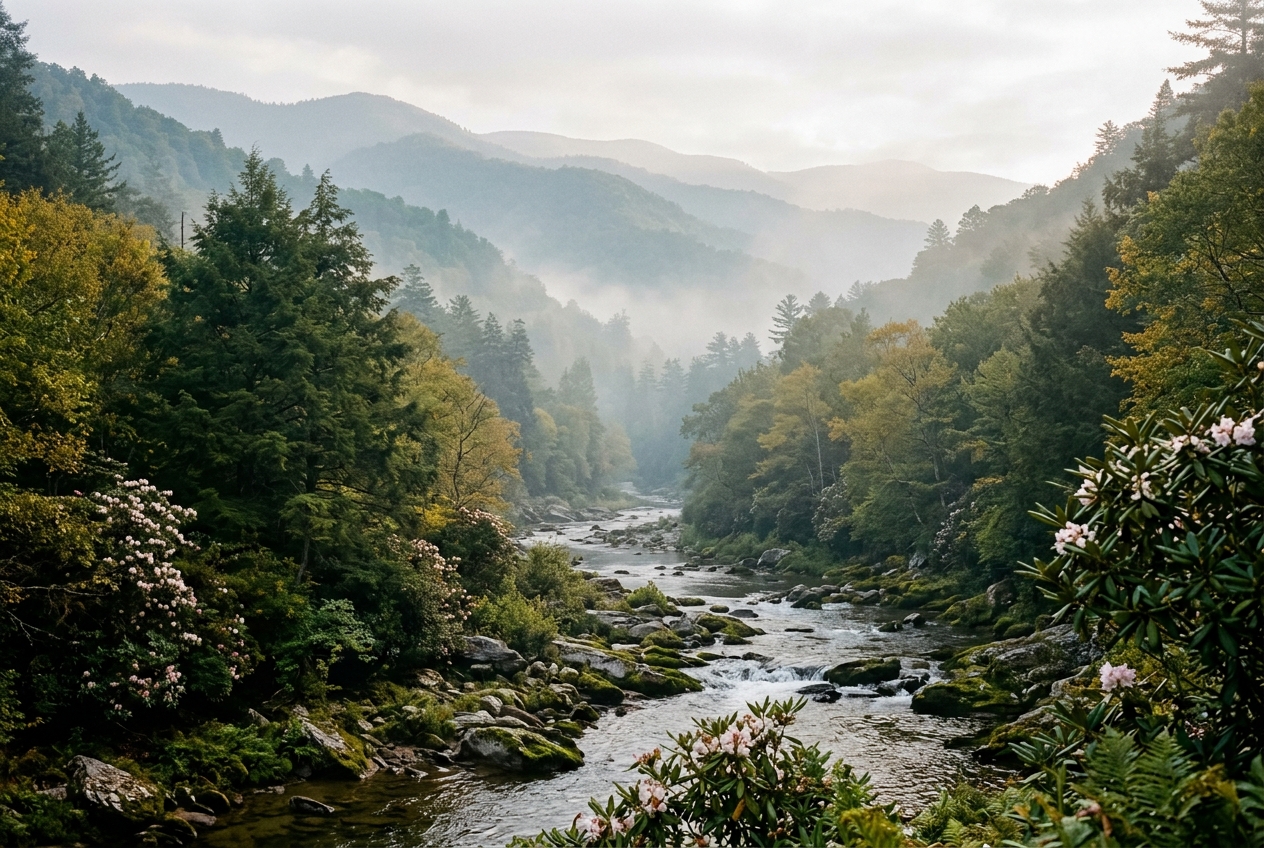
North Carolina · The Qualla Boundary, Eastern Band of Cherokee Indians
Cherokee
Removal took most of a nation west. This is the ground the rest of it never left.
Why this city
In 1838 the majority of the Cherokee Nation was forced west on the Trail of Tears. Several hundred people remained in the North Carolina mountains — some by legal manoeuvre, some by hiding, some through the citizenship secured by Will Thomas and Yonaguska — and their descendants are the Eastern Band of Cherokee Indians. The Qualla Boundary is roughly 57,000 acres of sovereign land, held in trust, adjoining the most-visited national park in the United States.
Enter as you would any other nation. The Museum of the Cherokee People was reinterpreted by the Band itself and is the correct first stop; Qualla Arts and Crafts Mutual, founded in 1946, is the oldest Native American arts cooperative in the country and the place to buy baskets, masks and pottery directly from enrolled artists. Buy there rather than from any roadside shop.
The Cherokee language is being taught in an immersion school here to reverse decades of loss, and members who ask respectfully are usually told about it plainly. Do not photograph ceremony. Do not ask to see a stomp dance. Do not use the word costume.
Museums & historic sites
Museum of the Cherokee People
The nation's own museum, recently reinterpreted by the Band. First stop, always, before the park or the shops.
Qualla Arts and Crafts Mutual
Founded 1946 — the oldest Native American arts cooperative in the United States. Baskets, masks and pottery from enrolled artists, priced honestly.
Oconaluftee Indian Village
A living-history village of the 1760s, staffed and interpreted by Cherokee people.
Kituwah Mound
The Cherokee mother town, a place of profound significance to the Band and repurchased by them in 1996. This is a sacred site, not an attraction — never climb it, and ask before you visit.
New Kituwah Academy
The Cherokee language immersion school. Not a visitor site; understand that it exists and why it had to be built.
Mounds & ancient Indigenous ground
Earthworks, shell rings and mound complexes within reach of the city — most of them older than anything else you will see on this trip. Where a site sits on sovereign or restricted land, enter with a tribal or preserve guide, and never climb a mound.
Kituwah Mound, Bryson City
The mother town of the Cherokee people, occupied for several thousand years. Sacred ground held by the Band; visit only with permission and do not walk on the mound.
Nikwasi Mound, Franklin
Forty minutes south: a Cherokee mound in the middle of a modern town, now stewarded by an Indigenous-led partnership. Do not climb.
Judaculla Rock, Jackson County
A soapstone boulder covered in petroglyphs of contested age and undisputed importance to Cherokee tradition. View from the platform only.
The Trail of Tears departure ground, Fort Butler
Murphy, an hour south-west: one of the removal-era stockades from which the forced march west began.
Where to stay
Tribally owned lodging on the Qualla Boundary
Booked through the Circle's desk. We place members in Native-owned or tribally operated lodging wherever the nation offers it, and say plainly when it does not.
A Bryson City or Sylva base for the park days
Independently held, twenty to thirty minutes out, quieter in high season.
The table
Cherokee kitchens on the Boundary
Bean bread, ramps in spring, trout, and hominy. Ask at the museum who is cooking traditionally the week you arrive.
A tribally owned dining room
The Band operates several. Choose these over the highway chains without exception.
Mountain trout and Appalachian tables in Bryson City
For the nights you are off the Boundary.
Tours & walks
A Cherokee-guided cultural tour of the Boundary
Arranged through the museum or the Band's tourism office. The only guide worth having here.
An Oconaluftee and Smokies day with a Cherokee naturalist
Plants, medicine, and place names on the nation's own terms.
A Trail of Tears route day
Kituwah, Nikwasi and Fort Butler in one solemn loop.
Members have this city's stays, tables and guides booked for them, with introductions where protocol allows. Everyone else is welcome to use the guide exactly as written.
All city guidesNext step
Behind the closed gate.
Our community-governed journeys and the Sovereign Florida Circuit go where a guidebook cannot take you.