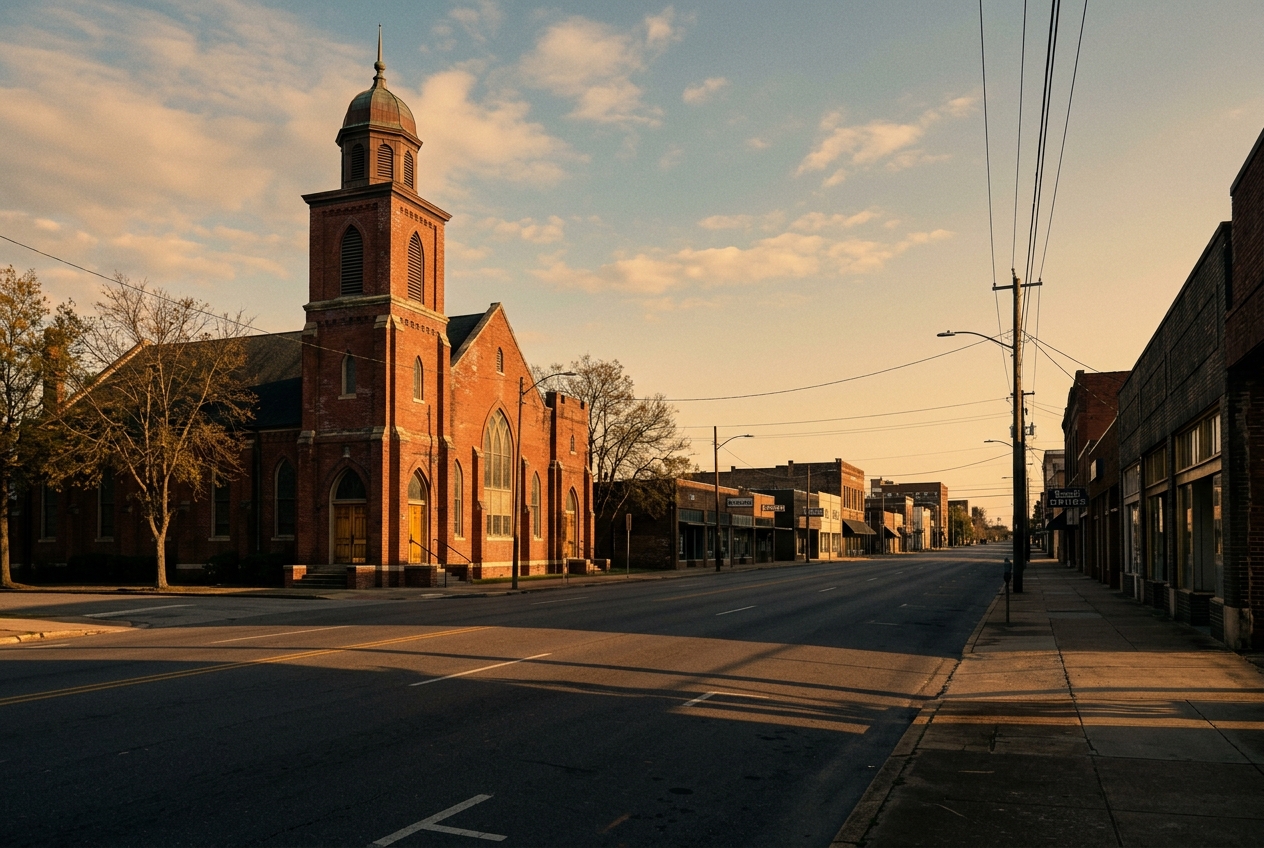
Alabama · Civil Rights District, Smithfield & Fourth Avenue
Birmingham
The city that was too hard to change, until children changed it in eight days.
Why this city
Birmingham was an industrial city built on iron, coal and limestone, and on a labour system that leased convicted Black men to mine and furnace operators for decades after emancipation. That is the economic ground beneath everything else here, and it is the part most itineraries skip.
By 1963 the city was so thoroughly segregated and so routinely bombed that Black residents called it Bombingham. In May of that year, after the adult campaign stalled, schoolchildren marched out of Sixteenth Street Baptist Church in waves and filled the jails. The images from Kelly Ingram Park across the street ended the argument nationally in about a week. On the 15th of September, four girls were killed by a bomb in that church's basement.
Two days minimum: the Civil Rights Institute and the church on the first morning, Kelly Ingram Park in the same hour, then Fourth Avenue and Smithfield. Keep the second day for Sloss Furnaces and the mines, so the money and the movement sit in the same trip.
Museums & historic sites
Sixteenth Street Baptist Church
Still an active congregation. Tours run on a schedule around worship — book ahead and take the basement.
Birmingham Civil Rights Institute
Directly across from Kelly Ingram Park. Allow three hours; the oral history booths are the reason to stay longer.
Kelly Ingram Park
Where the dogs and the hoses were turned on children. Walk the perimeter sculpture path slowly, in the morning.
Fourth Avenue Historic Business District
The Black commercial spine — the Carver Theatre, the Alabama Jazz Hall of Fame, and the surviving storefronts.
Bethel Baptist Church, Collegeville
Fred Shuttlesworth's church, bombed three times. Arguably the true engine of the 1963 campaign, and rarely visited.
Sloss Furnaces National Historic Landmark
The blast furnaces that made the city, worked substantially by Black labour, including leased convicts.
Mounds & ancient Indigenous ground
Earthworks, shell rings and mound complexes within reach of the city — most of them older than anything else you will see on this trip. Where a site sits on sovereign or restricted land, enter with a tribal or preserve guide, and never climb a mound.
Moundville Archaeological Park
An hour south-west near Tuscaloosa: twenty-nine mounds on the Black Warrior River, and one of the largest Mississippian centres in the Southeast. The Jones Museum was rebuilt with tribal consultation.
Oakville Indian Mounds Park & Museum
Ninety minutes north: a Woodland-period mound and a museum interpreting Cherokee and Yuchi history in north Alabama.
Bottle Creek and the Mobile-Tensaw delta
For members going south: a major Mississippian site reachable only by boat, in the delta above Mobile.
Creek and Cherokee homeland
Jones Valley was Creek ground until the 1814 Treaty of Fort Jackson took two-thirds of Creek territory. The city is younger than the removal that cleared it.
Where to stay
A Black-owned inn or guesthouse near the Civil Rights District
Booked through the Circle's desk. Where a town has no Black-owned house at this standard, we say so and place you in the best independent room instead.
A downtown base within walking distance of Sixteenth Street
Independently held. The district is best entered on foot and early.
The table
A Black-owned soul food institution
Birmingham has kitchens run by the same families since the movement years. Weekday lunch, before one o'clock.
A Black-owned contemporary Southern dining room
The current generation, Alabama produce, a bar worth sitting at.
A Fourth Avenue lunch counter
In the historic business district — the point is where you are sitting as much as what arrives.
Tours & walks
A Civil Rights District walk with a movement historian
Church, park, and jail route, with the 1963 chronology in order.
A Black-owned Birmingham food tour
Soul food and the church-supper tradition that fed the campaign.
An industrial history tour of Sloss and the mines
Convict leasing, the furnaces, and who the city's fortune was actually built by.
Members have this city's stays, tables and guides booked for them, with introductions where protocol allows. Everyone else is welcome to use the guide exactly as written.
All city guidesNext step
Behind the closed gate.
Our community-governed journeys and the Sovereign Florida Circuit go where a guidebook cannot take you.